
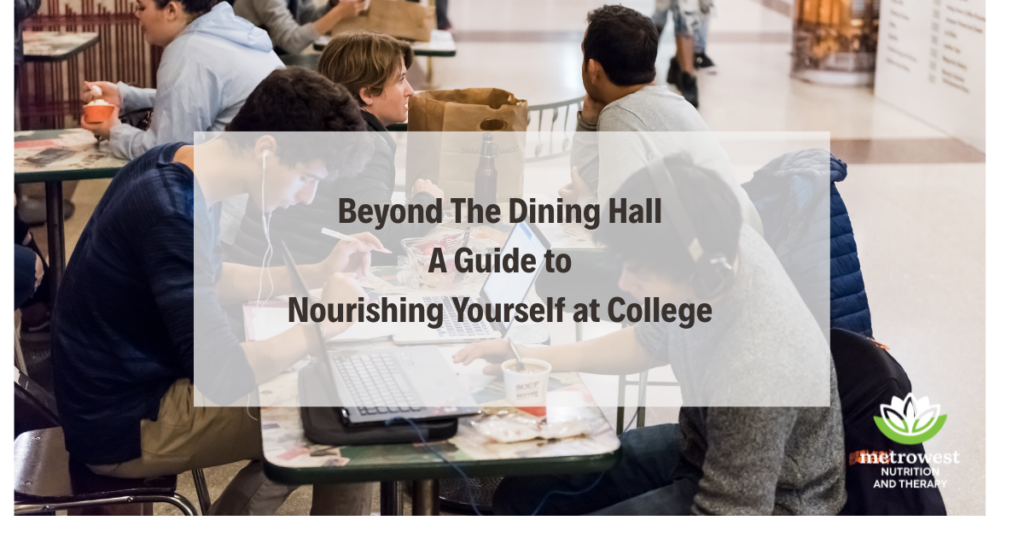
Beyond the Dining Hall: A Guide to Nourishing Yourself at College
Beyond the Dining Hall: A Guide to Nourishing Yourself During Your First Year of College
What’s for dinner? This is a question many students will answer for themselves for the first time when they head to college this fall. While there are ample food options, we’ve found this can be quite overwhelming for kids new to independent living.
Navigating the college eating scene may be even more challenging for some. If you’re a creature of habit, anxious in new environments or more selective with food choices, it’s natural to feel a sense of uncertainty approaching college.
You may be wondering:
- What if I don’t like the dining hall?
- How do I budget for groceries or meals?
- When will I eat if my classes are scheduled during mealtime?
- Who will I eat with?
- How do I know what to choose with so many options?
- How do I make sure I’m eating adequately for nutrition needs and health?
College can be stressful. It’s a huge transition. Changing routines, new eating environments and social pressures can make eating feel more complicated. Rather than focusing on “avoiding the freshman fifteen” which often leads to disordered eating patterns, we encourage you to think about using nutrition as a tool to support energy, learning, mental health, athletic performance, and overall wellbeing.
The goal isn’t perfect eating, it’s building sustainable habits that will last into adulthood.
Your schedule will vary—and so will your eating times
College schedules rarely resemble high school.
Early labs.
Classes scheduled at mealtimes.
Late-night studying.
Club meetings.
Social events.
Classes spread across campus.
Instead of aiming for perfect meal timing, create a flexible rhythm.
A helpful starting point is to space meals 4-5 hours apart and carry snacks for in-between. Or, if needed, to help hold you over until the next available meal. Start with breakfast. This may mean you have to set your alarm a little earlier or keep transportable options in your dorm room so you can eat on your way to class. Shoot for 3 meals and 2-3 snacks daily. If you’re studying late at night, you may need to add an extra snack in!
Consistent nourishment is important to support:
- concentration
- stable energy
- mood
- stress management
- sleep
- recovery from illness
Even if meals shift, keeping regular opportunities to eat helps your body know food is coming. If you are an athlete, you’ll need to be more intentional about getting enough food in at meals and snacks and make sure to carry a water bottle with you for adequate hydration. Setting simple patterns and behaviors in place early will help you in the long run!
Dining halls are designed for flexibility—not perfection
Dining halls can be super fun, social environments and offer a lot of flexibility. They typically have large windows of time for meals, accommodate varying dietary needs and offer to-go options. Dining halls can also be overwhelming. Endless options, unfamiliar foods, and sometimes pressure from friends can make decisions challenging. It also makes connecting with your body’s hunger and fullness cues more difficult. Maybe college students report under- or overeating in the dining hall because there’s so much else going on in that eating environment.
Takes some time ahead of meals to check in with yourself
- How hungry are you?
- What are you in the mood for?
- What sounds satisfying?
- What will hold me through my next class?
- When will you have a chance to eat next?
- What options are available? (check the menu ahead of time)
- What combination gives me nutrition balance, and is also enjoyable?
Remember:
No single meal defines your health.
Over time, variety matters far more than perfection.
Build balanced meals instead of counting calories
A simple plate might include:
Carbohydrates
- rice
- pasta/ noodles
- potatoes
- bread
- cereal
- polenta
- crackers
- baked goods
Protein
- chicken
- beans
- tofu
- fish
- eggs
- yogurt
- meat
- cheese
Color
- fruits
- vegetables
Fat
- nuts
- nut butters
- avocado
- oils
- butter
- dressing
And don’t forget foods that simply bring joy. Eating is about nourishment and satisfaction.
Budgeting without sacrificing nutrition
Many students quickly discover eating off campus adds up and with less time available to work, it can be hard to replenish food funds.
Some ideas:
- Use your meal plan whenever possible.
- Keep portable snacks in your backpack.
- Shop sales when buying groceries.
- Avoid delivery fees when possible
- Split takeout with roommates.
- Stock easy dorm foods like yogurt, trail mix, cereal, peanut butter, frozen meals, fruit, oatmeal, hummus, cheese sticks.
Having easy foods available often prevents accidentally skipping meals.
Stress changes appetite
Some students eat less when stressed. Others eat more. Neither response is “wrong.” Understanding how your appetite changes with stress can help you plan ahead. Are there some easy-to-grab and eat foods you can keep on hand? Liquid nutrition options like smoothies are often key! Plan small, frequent meals to keep blood sugar stable. Take breaks from studying to eat instead of eating while you’re studying. Think of food as fuel for your brain—not a reward you have to earn or a source of procrastination.
Common challenges students experience
Many first-year students struggle with:
- forgetting meals
- irregular sleep schedules
- relying on caffeine
- reliance on low nutrient convenience foods
- limited cooking skills
- mismanaging food budget
- changing body image
- comparing eating habits with roommates
- increased alcohol use affecting appetite
These challenges are common—and they’re manageable with support.
Prepare Ahead and Feel Confident
Learning to feed yourself is a skill, not something you’re expected to know overnight. Notice what works and what doesn’t. Give yourself permission to experiment. Some weeks will feel organized and some won’t. That’s ok! When you can, take time to plan ahead. Keep your fridge and shelves stocked with foods you like as a back-up.
What matters most is continuing to come back to regular nourishment, flexibility, and self-compassion. If eating begins to feel stressful, overwhelming, or emotionally charged, reaching out for support early can make a tremendous difference. If you need some extra support, our dietitians are available to help you plan ahead for the college transition. Reach out here.