FOOD FOR THOUGHT
Samantha Millette, LICSW
Licensed Independent Social Worker
She/Her
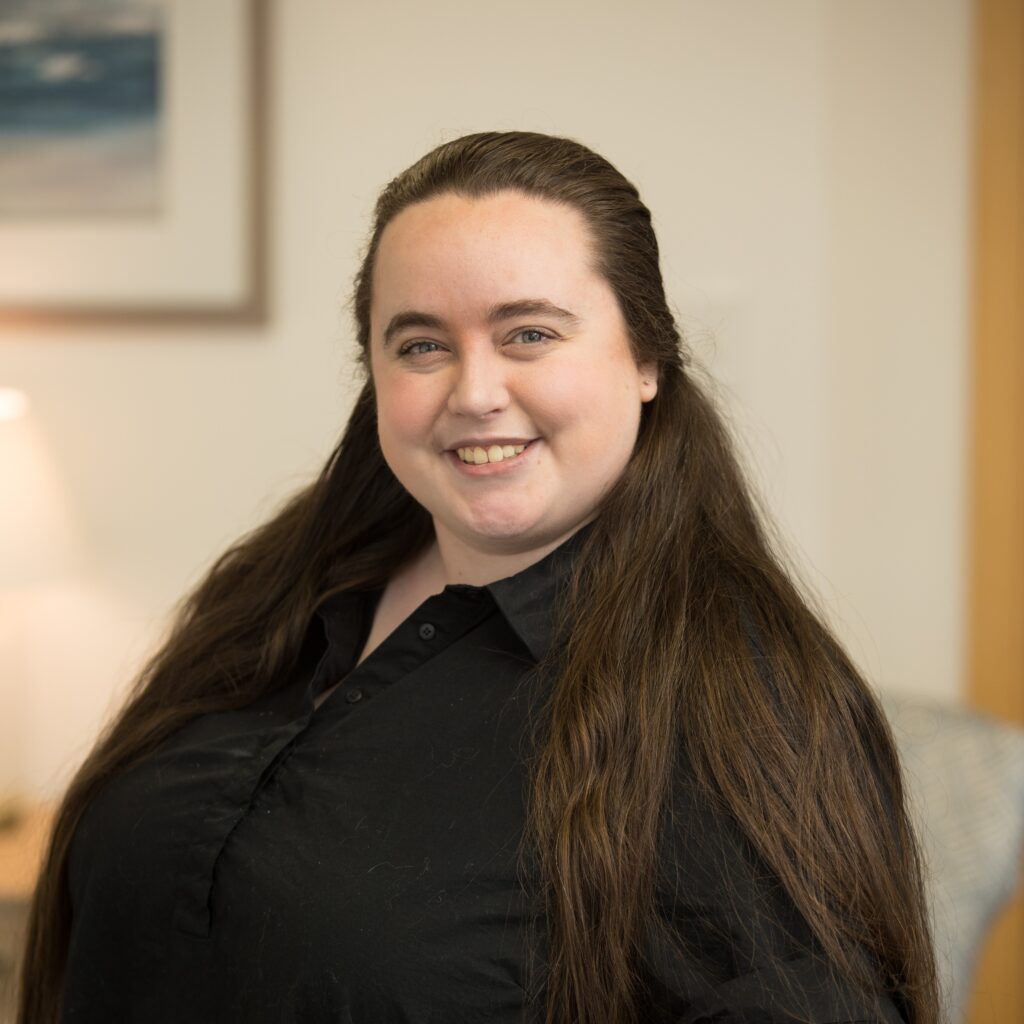
Samantha has worked with a wide variety of individuals at different points in their recovery journey utilizing a client-centered, trauma-focused, and harm-reductionist approach to treatment
Samantha (“Sam”) is a Licensed Independent Clinical Social Worker with extensive experience in eating disorders, trauma, chronic illness and women’s health. She knew in high school that she wanted to pursue a career in the helping profession. Through her own family’s experiences navigating the medical and mental healthcare systems, she came to understand firsthand how frustrating, confusing, and overwhelming the process of seeking care can be. These experiences shaped her compassion for clients and her understanding of the unique challenges that can arise when reaching out for support, especially for the first time.
Sam completed her undergraduate degree at Lesley University, where she double majored in Expressive Arts Therapy and Mental Health Counseling. She developed an interest in eating disorders and trauma her internship at Boston Children’s Hospital’s acute psychiatric unit . She went on to complete a master’s degree in social work at Simmons University. Her internship at Walden Behavioral Care further developed her skill and knowledge in eating disorder treatment.
Sam values the multidisciplinary approach to eating disorder care and is deeply committed to challenging the harmful effects of fatphobia and diet culture within healthcare. As a fat provider, she strives to create a supportive space where clients can explore how weight stigma, cultural messages about bodies, and experiences of discrimination may impact self-worth, body image, and their relationship with food.
Sam also has a strong clinical interest in the ways eating disorders, trauma, and mental health intersect with chronic illness, particularly autoimmune conditions, as well as significant transitions that can affect women’s relationships with their bodies, including the perinatal period and perimenopause. Her approach recognizes that our experiences with food and our bodies do not exist in isolation, but are shaped by our health, identities, relationships, and the broader culture in which we live.
SPECIALTIES
Eating Disorders and Disordered Eating
Chronic Illness
Women’s Health
Body Image
Trauma, including PTSD and CPTSD
ADHD
OCD